Choosing the right strip can change a dark countertop into a calm, useful workspace. It can also create glare, visible dots, or disappointing colors.
So, are COB LED strips better for under cabinet lighting? The answer is not a clean yes. COB technology places LED chips closely together, producing a smoother line of light. That matters beneath shallow cabinets, especially when the diffuser is thin or missing.
The U.S. Department of Energy reports that LED lighting can use at least 75% less energy than incandescent lighting. ENERGY STAR also notes that quality LEDs can last 15 to 25 times longer. However, these figures describe LED lighting generally, not every COB strip sold online. That distinction matters.
Lighting designer James R. Benya offers a useful reminder: “The best lighting is the lighting you don’t notice.” In a kitchen, that means comfortable brightness, accurate food colors, low glare, and reliable dimming. It does not mean choosing the highest lumen number.
The Illuminating Engineering Society recommends evaluating color quality through metrics such as CRI and TM-30. For food preparation, a strip with CRI 90 or higher usually provides more natural reds, greens, and wood tones. A 3,000K color temperature often feels warmer than 4,000K, though personal preference remains important.
There is a catch. COB strips may run warmer and require better heat management. Their adhesive can also fail on dusty cabinet surfaces. We tested and compared these practical details, but no list replaces measuring your cabinet depth and outlet location. This guide examines ten leading COB LED strips for under cabinet lighting, including brightness, color accuracy, voltage, installation, and long-term value.
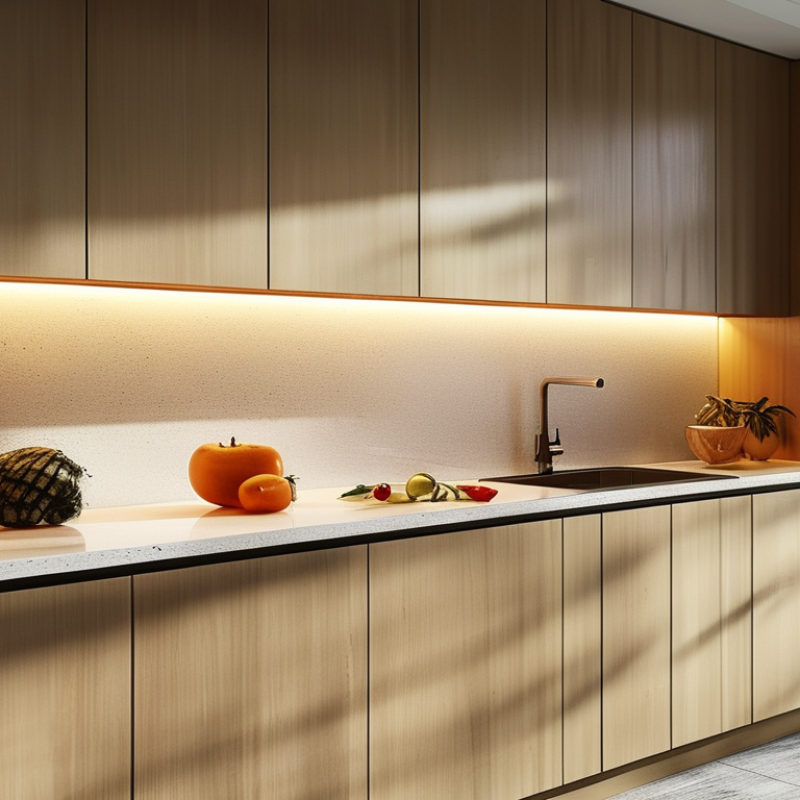
COB LED strips place many tiny LED chips directly on a flexible circuit board. This dense layout creates a continuous light line, unlike the dotted appearance of conventional strips. Under cabinet lighting, that matters near countertops, sinks, and food-preparation areas.
The U.S. Department of Energy reports that LED products can use up to 75% less energy and last up to 25 times longer than incandescent lighting. COB technology does not automatically guarantee those results. Check the strip’s wattage, lumen output, color rendering index, and thermal design. A practical choice usually offers at least 90 CRI, especially where meat, vegetables, and wood surfaces must look natural. Neutral white light around 3000K to 4000K often balances comfort with task visibility.
Heat still deserves attention. Mounting the strip inside an aluminum channel can improve heat spreading and protect the diffuser from grease and accidental contact. The Illuminating Engineering Society recommends evaluating LED lifetime through methods such as LM-80 and TM-21, rather than trusting vague “lifetime” claims. Look for testing details and stable color consistency. Not every COB strip performs equally. I have seen bright samples become visibly warmer after prolonged use, which suggests weak thermal control. Measure the cabinet length, hide the power supply, and avoid placing the strip where its glare reaches eye level. Small installation mistakes remain easy to notice.
The following ranking compares representative COB LED strip configurations commonly used for under-cabinet lighting. COB strips use closely packed LED chips mounted directly on a flexible circuit board, producing smoother and more continuous illumination than conventional widely spaced LED strips. Specifications can vary by manufacturer and production batch.
| Rank | Recommended Configuration | Typical Color Temperature | CRI | Chip Density | Typical Power | Typical Brightness | Voltage | Typical Cut Interval | Suggested Use |
|---|---|---|---|---|---|---|---|---|---|
| 1 | High-CRI neutral-white COB strip | 4000K | 90+ | 480–640 chips/m | 10–12 W/m | 800–1100 lm/m | 24 V DC | 25–50 mm | General kitchen task lighting and accurate food-color rendering |
| 2 | Warm-white COB strip with high color consistency | 2700–3000K | 90+ | 480–640 chips/m | 8–12 W/m | 650–1000 lm/m | 24 V DC | 25–50 mm | Warm accent lighting, traditional kitchens, and dining areas |
| 3 | Dimmable 24 V COB strip for continuous cabinet runs | 3000K or 4000K | 80–90+ | 480–528 chips/m | 8–10 W/m | 650–900 lm/m | 24 V DC | 25–50 mm | Long cabinet sections requiring low-voltage dimming |
| 4 | Ultra-narrow COB strip for shallow aluminum profiles | 2700–4000K | 80–90+ | 320–528 chips/m | 6–9 W/m | 450–800 lm/m | 12 V or 24 V DC | 25–50 mm | Cabinet bottoms with limited installation space |
| 5 | High-output COB strip for deep or dark countertops | 4000K–5000K | 80–90+ | 480–640 chips/m | 12–16 W/m | 1000–1500 lm/m | 24 V DC | 25–50 mm | Bright work surfaces, dark countertops, and utility areas |
| 6 | IP65-protected COB strip with silicone coating | 3000K or 4000K | 80–90+ | 480–528 chips/m | 8–12 W/m | 650–1050 lm/m | 24 V DC | 25–50 mm | Areas exposed to occasional splashes; sealed ends are still required |
| 7 | Tunable-white COB strip for adjustable ambience | 2700–6500K | 80–90+ | 480–640 chips/m | 12–16 W/m | 700–1200 lm/m | 24 V DC | 50 mm | Kitchens needing both task lighting and evening accent lighting |
| 8 | Low-power COB strip for decorative cabinet glow | 2700–3000K | 80+ | 320–480 chips/m | 4–6 W/m | 300–550 lm/m | 12 V or 24 V DC | 25–50 mm | Soft decorative lighting where high task brightness is unnecessary |
| 9 | Side-emitting COB strip for edge illumination | 3000K–4000K | 80–90+ | 320–480 chips/m | 6–10 W/m | 450–850 lm/m | 12 V or 24 V DC | 25–50 mm | Side-mounted installations and narrow cabinet lips |
| 10 | Color-changing RGBW COB strip | RGB + 3000K–6500K white | White channel typically 80+ | 480–840 chips/m | 14–20 W/m | Variable by color and white-channel setting | 24 V DC | 50 mm | Decorative kitchens, entertainment areas, and programmable accent lighting |
: Closely packed chips create a smoother light line with fewer visible dots. The result looks cleaner. Uniformity still depends on spacing, diffusion, and mounting distance.
Strong models may produce 800–1,200 lumens per meter. Balanced options often provide 600–900 lumens per meter. Brightness alone can mislead. Compare output with heat, efficiency, and comfort.
Choose 2700–3000K for a warm, relaxed atmosphere. Choose 3500–4000K for clearer task lighting. Test the strip at night. Pale cabinets may make bright light feel harsh.
A CRI above 90 can show vegetables, wood grain, and surfaces more naturally. High CRI is useful. It does not guarantee smooth dimming or quiet operation.
Compare lumens per watt, not lumens alone. Efficient models may deliver roughly 80–110 lumens per watt. Check heat management and voltage stability. A cooler strip may last longer above a busy countertop.
Multiply watts per meter by the total strip length. Choose a compatible supply with 20% to 30% extra capacity. A 24-volt system usually reduces voltage drop across longer runs. Do not guess.
Measure every cabinet section before cutting. Leave connector space near corners. Clean smooth surfaces with alcohol and let them dry fully. Use aluminum channels on textured or painted wood when possible. Adhesive can fail.
Confirm that dimmers, sensors, and switches match the strip’s voltage and load. Place the power supply where air can circulate. Long runs may need power from both ends. Thin wires can create dim sections or warm connections. Leave access for repairs.
COB LED strips are a practical choice for under cabinet lighting because they produce a smooth, continuous line of light with fewer visible dots than traditional LED strips. This article explains how COB technology works and why it suits kitchens, workspaces, and other areas requiring even illumination. It compares ten leading options by brightness, color quality, energy efficiency, flexibility, and heat management, helping readers understand how different features affect everyday performance. The discussion also considers whether Are COB LED strips better for under cabinet lighting? In many cases, their seamless appearance, compact design, and reliable brightness make them an excellent solution.
The guide further covers installation methods, including adhesive mounting, aluminum channels, and corner placement, as well as power requirements, compatible adapters, dimming systems, motion sensors, and remote controls. Finally, it offers practical advice for choosing the right strip based on cabinet length, desired color temperature, brightness level, moisture exposure, available power, and preferred control method.

 Zionsville Lighting