When considering indoor residential lighting solutions, the question arises: "Can I use high voltage LED strips for indoor residential projects?" High voltage LED strips offer unique advantages, such as brighter illumination and energy efficiency. However, these benefits come with concerns about safety and installation methods.
Using high voltage LED strips in your home can transform spaces significantly. They are especially suitable for areas where bright light is essential. Nonetheless, their installation requires expertise to ensure safety. Improper handling can lead to electrical hazards. This raises the need for professional assistance in many cases.
Choosing the right lighting product involves assessing your needs and environment. High voltage LED strips can serve various functions, from accent lighting to task illumination. However, they might not be the best choice for every setting. It is essential to weigh your options carefully and consult with experts if unsure.
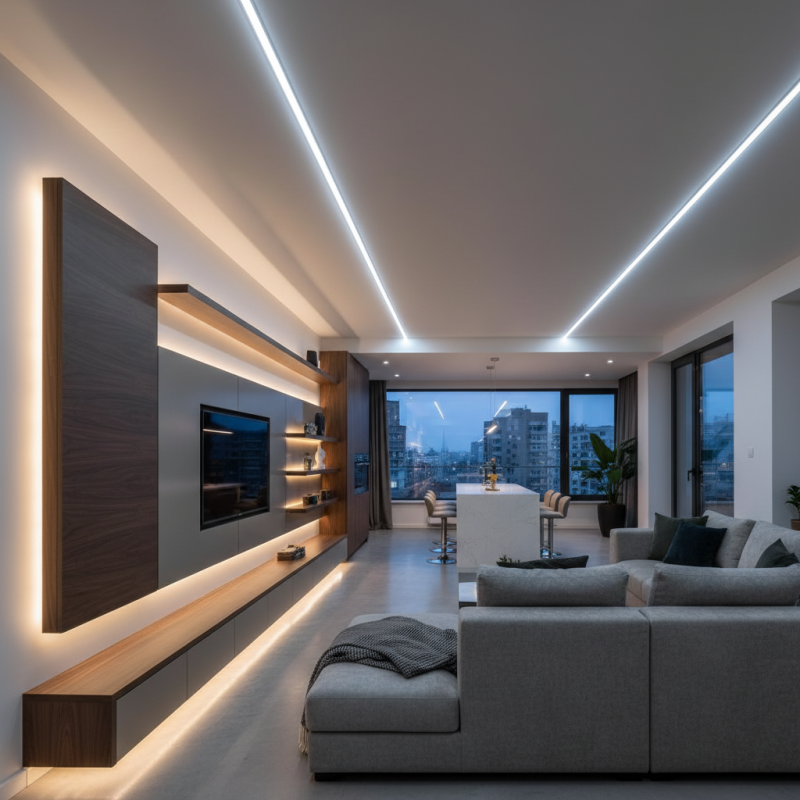
High voltage LED strips are increasingly popular for indoor residential projects. They provide vibrant lighting while being energy efficient. Different types of high voltage LED strips suit various indoor applications. Understanding these options is crucial for effective usage.
One common type is the 120V LED strip. This option eliminates the need for a transformer. It simplifies installation across larger spaces. Additionally, these strips are available in various color temperatures. Homeowners can choose warm or cool white tones to achieve the desired ambiance. Another type is the RGB LED strip. This variant adds versatility by allowing users to select from multiple colors. It's perfect for setting mood lighting in living rooms or entertainment areas.
When selecting high voltage LED strips, pay attention to their quality. Quality affects durability and light output. Not all strips have the same rated lifespan. Some may dim faster over time. Consider the installation area too. Not all strips are waterproof or moisture resistant. This is important for kitchens or bathrooms. Always check the specifications to ensure they fit your needs.
| Type | Voltage | Length Available | Brightness (Lumens/m) | Color Temperature (Kelvin) | Dimming Capability |
|---|---|---|---|---|---|
| High Voltage Cool White | 120V | 16.4 ft | 1200 | 6000K | Yes |
| High Voltage Warm White | 120V | 16.4 ft | 1000 | 3000K | Yes |
| RGB Color Changing | 120V | 16.4 ft | 800 | Various | Yes |
| High Voltage Daylight | 120V | 16.4 ft | 1100 | 5000K | Yes |
| High Voltage Soft White | 120V | 16.4 ft | 950 | 2700K | Yes |
: High voltage LED strips are lighting solutions for indoor use. They operate at 120V or 240V.
No, 120V strips eliminate the need for a transformer. This simplifies installation in larger spaces.
Options include warm white or cool white. Warm white is cozy; cool white is modern.
Check the rated lifespan and lumen output. Not all strips maintain brightness over time.
Not all strips are waterproof. Check the specifications to ensure moisture resistance.
Some strips are flexible, while others are rigid. Consider your design needs before purchasing.
Look at the lumen output per foot. Higher lumens mean brighter light for your spaces.
Always test the strips in a small area first to gauge brightness and color accuracy.
Regularly inspect for wear or malfunction. Safety is crucial for longevity and performance.
It helps identify potential issues like heat generation that affect performance over time.
When considering the suitability of high voltage LED strips for indoor residential projects, it's important to understand their specific types and features. There are various types available that cater to indoor use, each with distinct characteristics that enhance their functionality. Key features to consider include brightness, color temperature, and energy efficiency, which contribute to the overall effectiveness and appeal of the lighting design.
Installation tips for high voltage LED strips are crucial for ensuring safety and optimal performance in residential settings. Proper wiring and positioning can maximize their impact while minimizing energy costs, making these strips an excellent choice for homeowners looking to create a modern ambiance. To answer the question, "Can I use high voltage LED strips for indoor residential projects?" the answer is yes, provided you select the appropriate type and follow installation guidelines. Ultimately, high voltage LED strips not only enhance aesthetic appeal but are also energy-efficient, presenting a cost-effective lighting solution for any home project.

 Zionsville Lighting