LED strips have transformed lighting solutions, particularly in high-voltage scenarios. However, many users often ponder, "How to dim high voltage LED strips safely?" Dimming these lights effectively requires a careful approach and an understanding of the risks involved. Improper dimming can lead to overheating, flickering, or even short circuits, which compromise safety.
When dealing with high voltage LED strips, several methods exist. Each technique comes with its own set of benefits and drawbacks. Using dimmers specifically rated for LED technology is essential. Traditional dimmers may not perform well, leading to unexpected results. Additionally, ensuring the dimmer's compatibility with the total load is crucial.
It’s vital to reflect on personal experiences when experimenting with dimming options. Mistakes can occur, and learning from them enhances our understanding. Always prioritize safety by consulting experts or reliable sources. By selecting the right method and taking precautions, one can achieve both aesthetics and functionality.
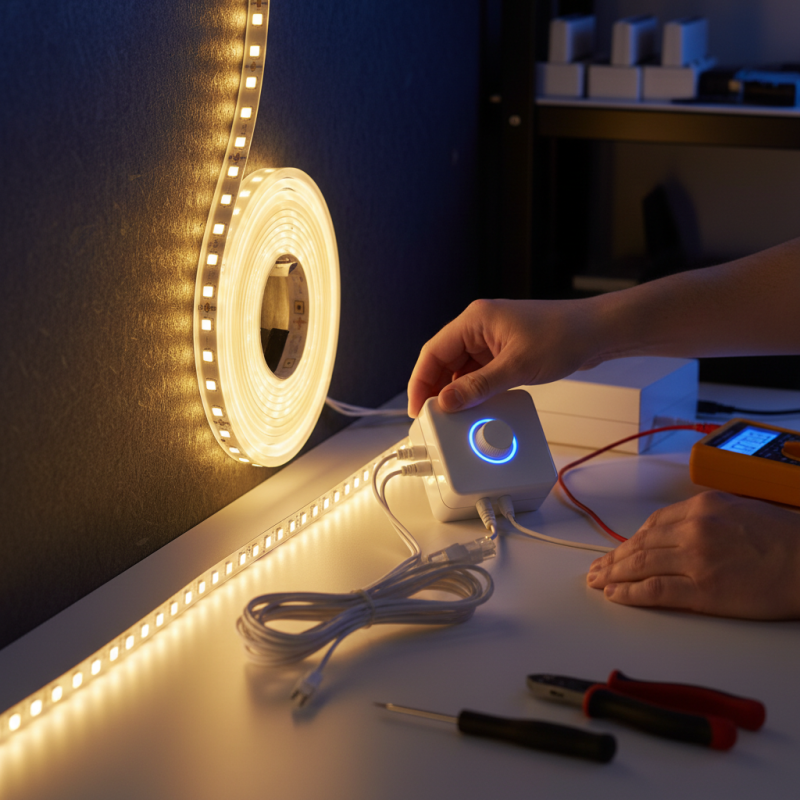
Understanding High Voltage LED Strips and Their Applications
High voltage LED strips are increasingly popular for various applications, from architectural lighting to commercial displays. They provide bright illumination and flexibility in design. However, their operation requires careful consideration due to the high voltage involved. Understanding the specific electrical requirements of these strips is crucial for safe installation and use. The ability to work with higher voltage allows for longer runs with fewer voltage drops, which is a significant advantage in larger spaces.
Despite their benefits, high voltage LED strips pose risks if not handled properly. Users must ensure appropriate insulation and protection mechanisms are in place. Limited knowledge about electrical systems can lead to installation errors. Therefore, proper education on LED technology is vital. It can be helpful to consult with lighting professionals or electricians, especially for complex setups. Incorporating dimming solutions safely also requires understanding their compatibility with high voltage systems.
Balancing brightness and aesthetic appeal should be a priority. Over-dimming can result in flickering or reduced lifespan of the LEDs. It is important to test setups in controlled environments first. This can help identify any issues before permanent installation. By staying informed and cautious, users can harness the full potential of high voltage LED strips safely.
Key Safety Considerations When Diming High Voltage LED Strips
When dimming high voltage LED strips, safety
should always come first.
Overloading circuits can lead to significant hazards. One must ensure the power source can handle the reduced voltage without risking damage.
Use dimmers designed specifically for high voltage systems.
These devices regulate the current flow effectively, preventing overheating and fire risks.
It's crucial to check compatibility between the LED strips and dimmers.
Mismatched equipment can cause flickering or total failure.
Regular inspections for frayed wires or loose connections are essential.
Safety isn’t just about the equipment; it's about routine maintenance too.
Always assess your setup before installation.
Consider the environment where you’ll use the LED strips.
Some areas might be more prone to moisture or heat. These factors influence electrical safety.
When using LED strips outdoors, ensure they’re rated for such conditions.
Take your time with installation to avoid poor connections.
Small oversights can lead to larger issues later.
Always prioritize safety over convenience when working with high voltage systems.
Top Methods for Dimming High Voltage LED Strips Effectively
Dimming high voltage LED strips can enhance ambiance and reduce energy consumption. Many users underestimate the complexity involved in effective dimming. Industry data illustrates that improper dimming can lead to flickering and reduced lifespan. According to a report from the Lighting Research Center, poorly dimmed LEDs can experience up to a 30% decrease in longevity. Thus, understanding the appropriate dimming methods is crucial.
A robust method for dimming involves using compatible dimmers, specifically designed for high voltage systems. PWM (Pulse Width Modulation) dimming offers precision control, minimizing flicker. Some experts recommend opting for a TRIAC dimmer. This choice provides smooth dimming performance without compromising the stability of the LED output.
Tips for effective dimming include always checking the dimmer compatibility with your LED strips. Mismatched dimmers can lead to performance issues. Regularly monitor your LED's brightness levels to ensure an optimal setting. It’s also beneficial to avoid excessive dimming. Going too low can sometimes lead to a buzzing sound and inefficient light output.
As technology evolves, new methods for dimming will surely emerge. Dimming may seem straightforward, yet it poses challenges that warrant careful consideration.
Top Methods to Safely Dim High Voltage LED Strips
| Dimming Method |
Advantages |
Disadvantages |
Applications |
| PWM Dimming |
High efficiency and precise control |
Requires compatible controllers |
Residential and commercial lighting |
| Resistor Dimming |
Simple and cost-effective |
Potential heat issues; less energy efficient |
Smaller LED setups |
| Triac Dimming |
Compatible with existing dimmer switches |
Flickering at lower brightness levels |
Home and architectural lighting |
| 0-10V Dimming |
Smooth dimming capability |
Requires specific driver compatibility |
Commercial and industrial applications |
| Smart Dimming |
Remote control and automation features |
Higher initial cost |
Smart homes and modern lighting systems |
Technical Devices and Tools for Dimming LED Strips Safely
When working with high voltage LED strips, safety is paramount. The right technical devices are essential for effective dimming. Tools such as pulse-width modulation (PWM) dimmers help achieve smooth light transitions. PWM dimmers operate by rapidly switching the LED on and off, controlling power delivery without wasting energy. This technique can improve LED lifespan, backed by reports that show an increase in efficiency by up to 30% when properly utilized.
Another option is the use of low voltage controllers. They convert high voltage to a safer low voltage, allowing for more reliable dimming operations. This method can reduce the risk of overheating. Research indicates that dimming LED strips through low voltage methods can lower heat generation by approximately 25%. However, it is critical to ensure compatibility with the LED strip specifications to avoid failures.
The integration of smart technologies is also becoming popular. Smart dimmers allow users to control lighting remotely and program dimming schedules. Reports suggest that homes utilizing smart dimming technology experience up to 40% energy savings annually. Despite these advancements, it's important to remember that improper installation can lead to flickering or even damage. Always consult with experts in the field to ensure safety and effectiveness.
Common Mistakes to Avoid When Dimming LED Strips
Dimming high voltage LED strips can enhance ambiance and energy efficiency. However, many overlook key aspects during the process. One common mistake is using incompatible dimmers. Not all dimmers work seamlessly with LED technology. This can lead to flickering or even permanent damage to the strips.
Another frequent error is failing to calculate the total load. Overloading a dimmer can result in overheating and pose safety hazards. It’s important to add up the wattage for all connected LEDs. Always check the specifications. Inadequate wattage can cause unreliable dimming performance.
Additionally, users often underestimate the importance of heat management. Without proper ventilation, LEDs can fail prematurely. It’s crucial to ensure adequate space around the strips. Consider using heat sinks or fans if necessary. Evaluating potential pitfalls can lead to safer and more effective dimming solutions.
Top Methods to Safely Dim High Voltage LED Strips
This chart illustrates the efficiency percentages of various methods used to dim high voltage LED strips. The data highlights PWM dimming as the most efficient, while voltage reduction shows lower effectiveness. Understanding these methods can help avoid common mistakes when dimming LED strips.
Conclusion
Dimming high voltage LED strips can enhance their versatility and energy efficiency; however, it is crucial to do so safely. To effectively address the question of how to dim high voltage LED strips safely, one must first understand their applications and the key safety considerations involved. Proper methods for dimming include using compatible dimmers designed for high voltage systems and ensuring that connections are secure to prevent short circuits or overheating.
Additionally, utilizing appropriate technical devices and tools, such as voltage regulators or LED drivers, can facilitate safe dimming practices. It is equally important to be aware of common mistakes, such as using incompatible dimmers or exceeding the rated voltage, to avoid damaging the strips. By following these guidelines, users can successfully and safely enhance their LED lighting experience.

 Zionsville Lighting