China Top Automotive LED Interior Light Manufacturers & Factory

Empowering Next-Generation Smart Cabins with Advanced Solid-State Lighting, OEM/ODM Integration, and Certified Reliability Standards.

Global Automotive Ambient Lighting Market & Technical Evolution

How the paradigm shift toward software-defined vehicles (SDVs) and autonomous cabins is reshaping vehicle interior illumination standards.

The Smart Cabin Era: Beyond Basic Illumination

Automotive interior lighting has progressed from purely functional dome lights to sophisticated, multi-layered ambient systems. With the rise of electric vehicles (EVs) and autonomous driving architectures, the vehicle interior is recognized as an extension of the consumer's living space. Original Equipment Manufacturers (OEMs) and Tier-1 suppliers use ambient lighting as a primary differentiator for branding, safety signaling, and user experience customization.

Today, light-emitting systems must integrate dynamically with the vehicle's Advanced Driver Assistance Systems (ADAS). For instance, an ambient LED strip on a door panel changes to flashing red when blind-spot sensors detect an approaching vehicle during a lane change. Achieving this high level of functional safety demands strict optical consistency, zero latency, and robust thermal management.

Automotive Cleanroom Production Manufacturing Facility
"According to automotive market reports, the global automotive ambient lighting market size is projected to reach USD 5.7 Billion by 2030, growing at a CAGR of 8.5%. This expansion is driven by consumer demand for premium interior aesthetics and interactive functional displays."

Zhejiang Zionsville Lighting Co., Ltd.

A trusted partner for precision-engineered linear solid-state lighting and OEM/ODM systems since 2011.

Founded in 2011, Zhejiang Zionsville Lighting Co., Ltd. has established itself as an innovative manufacturer and global exporter of high-quality LED lighting systems. Our catalog spans Neon Lights, COB (Chip-on-Board) Strips, Flexible LED Strips, and Linear Wall Washers designed to meet the strict physical and electrical requirements of commercial and automotive environments. Our engineering and production systems conform to global standards, backed by internationally recognized certifications such as ETL, TUV, CE, and RoHS.

As a specialized OEM/ODM manufacturer, we work closely with engineering teams to produce custom molds, specialized PCB layouts, and customized phosphor-converted color profiles. By adopting the ISO9001:2015 Quality Management System, we ensure that every production batch meets strict quality controls. Our facility is equipped with automated high-speed SMT lines, advanced optical testing spheres, and environmental simulation equipment, enabling us to deliver reliable lighting solutions that meet global standards.

2011

Year Established

99%

Repurchase Rate

30+

Export Countries

5-Year

Product Warranty

Expert Engineering Team

Highly skilled engineers providing rapid prototyping, custom PCB shapes, and tailored color-rendering indices to fit exact mechanical spatial layouts.

State-of-the-Art Labs

Our in-house facility handles integration sphere measurements, thermal cycle tests, mechanical twist tests, IP67/IP68 ingress tests, and IES file generation.

Advanced Automation

Over 30 automated high-precision placement and encapsulation machines reduce lead times while keeping pitch tolerances and color binning highly consistent.

Technical Roadmap of Automotive Flexible Light Sources

The progression of design engineering: balancing mechanical flexibility with thermal dissipation and electrical endurance.

Phase 01

High-Density Point Sources

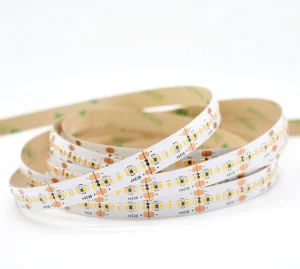
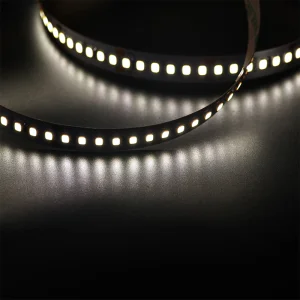
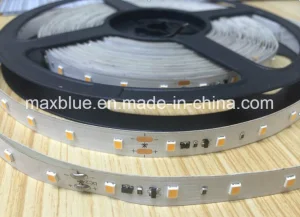
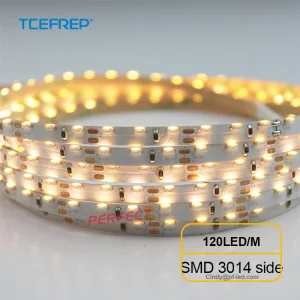
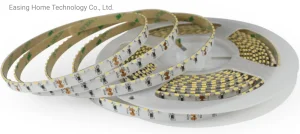
Utilizing high-efficacy SMD emitters (such as 2216 and 3014 LEDs) with ultra-narrow pitch spacing. This setup ensures seamless, shadow-free lines of light when installed inside light-guide pipes or diffuser channels.

Phase 02

Continuous COB Technology

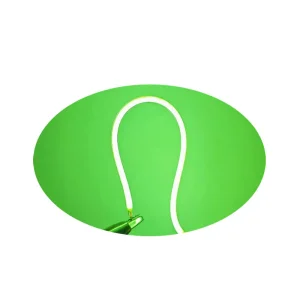
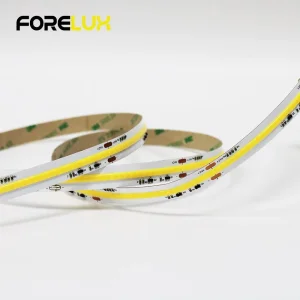
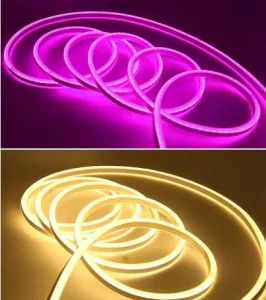
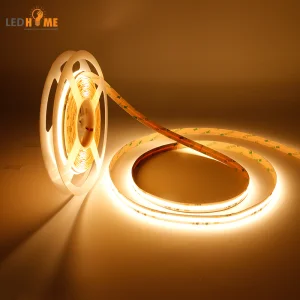
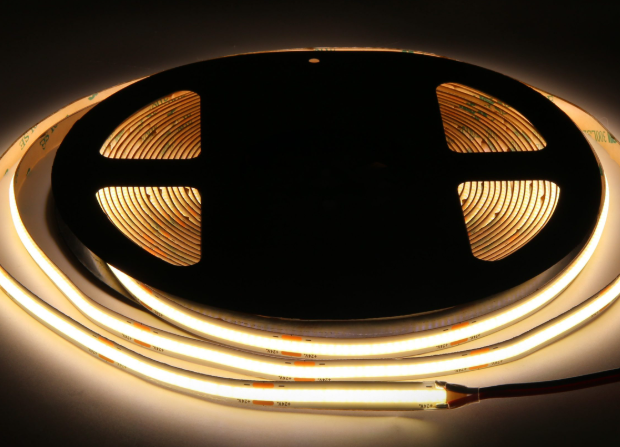
Direct Chip-on-Board encapsulation eliminates individual diode images. Employing silicone gel deposition over raw micro-LED dies allows for tight bend radii, minimal cross-sections, and uniform, dot-free illumination.

Phase 03

Dynamic Addressable Pixels

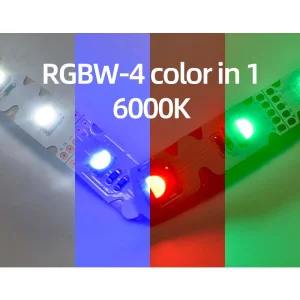
Integrating smart ICs (e.g., driver-on-board architectures or ISELED protocols) to allow individual control over color and brightness for each node. This capability supports dynamic vehicle alerts and startup light animations.

Key Materials and Mechanical Challenges

Designing light sources for automotive cabins presents unique engineering challenges compared to residential fixtures. Constant vehicle vibration, temperature swings (-40°C to +85°C), and sunlight exposure require durable materials:

  • FPC Design (Flexible Printed Circuits): To prevent copper trace fatigue from vehicle vibrations, we design circuits using rolled annealed (RA) copper instead of electrodeposited (ED) copper. This layout supports easy routing through complex door panels, dashboard seams, and tight console contours.
  • Silicone Encapsulation: Traditional PVC yellow-shifts and cracks under high heat and UV exposure. Our automotive-grade silicone extrusions are engineered to resist yellowing and maintain flexibility, meeting strict cabin emission and outgassing standards.
  • Voltage Fluctuation Safeguards: Vehicle battery networks experience voltage spikes and drops. Our constant-current drivers maintain a steady current to the LEDs, preventing flickering or brightness drops, whether the engine is idling or under acceleration.

Comprehensive Solutions for Tier-1 Systems Integrators

Providing custom lighting solutions designed for high reliability, thermal efficiency, and simple assembly on automotive production lines.
High Precision Optical Inspection and Quality Testing Lab

Integrating Light Sources for Cabin Assemblies

Adding LED light sources into automotive cabin assemblies requires careful planning. We provide Tier-1 integrators with comprehensive solutions to address assembly line efficiency, optical consistency, and operational safety:

  • Automated Mechanical Installation: Our flexible LED strips feature industrial-grade, automotive-specific adhesive backings (such as 3M VHB series) to ensure permanent bonding to ABS, polycarbonate, and polypropylene door trims.
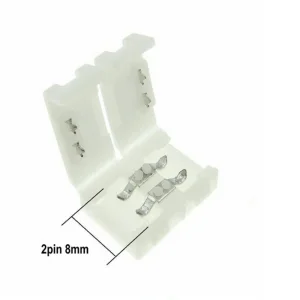
  • Optimized Connector Interfaces: We supply plug-and-play, vibration-resistant locking connectors that simplify wire harness integration and reduce assembly errors on production lines.
  • Matched Color Binning: We use precise MacAdam Ellipse color binning controls to ensure consistent color temperatures across different batches. This prevents variations in light output between the dashboard and doors.
Direct Support for Automotive Standards: Our engineering processes are optimized to support your product development cycles. We provide comprehensive PPAP (Production Part Approval Process) documentation, IMDS (International Material Data System) filings, and extensive environmental simulation test data to help speed up your quality approvals.

Technical Q&A: Engineering & Customization

Detailed answers to common questions asked by automotive engineers, tier-1 suppliers, and product managers.

Q1: What thermal management strategies are utilized in your flexible LED strips?
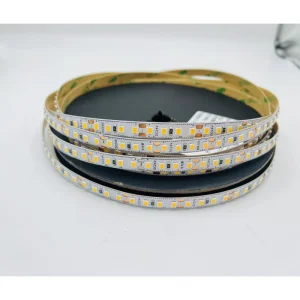
Our high-output flexible LED strips utilize 2oz or 3oz rolled annealed copper PCBs to improve thermal dissipation. We also offer thermally conductive backings that help transfer heat directly to the vehicle's metal mounting surfaces or mounting profiles, maintaining low junction temperatures and prolonging LED lifespan.
Q2: Can Zionsville supply customized S-shape (zigzag) strips to match non-linear trim lines?
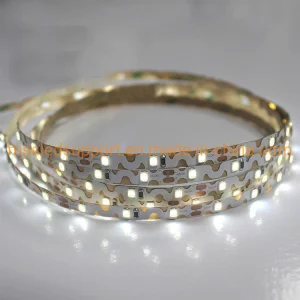
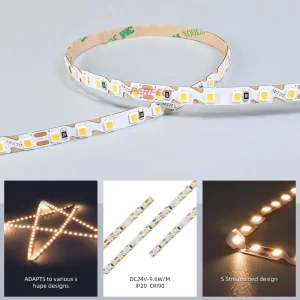
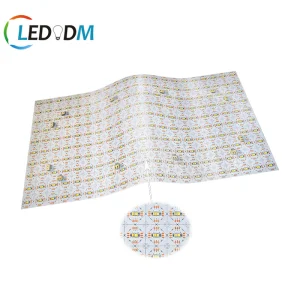
Yes. Our S-shape and zigzag PCBs are designed to bend along the horizontal plane without buckling or damaging the copper traces. This allows the strips to trace complex curves around center consoles, door pockets, and dashboard contours without requiring manual splicing.
Q3: How does your factory ensure compliance with automotive chemical and environmental regulations?
All materials used in our production lines are fully RoHS and REACH compliant. We provide complete material declarations and enter components into the IMDS (International Material Data System) database to ensure transparency and ease compliance checks for global automotive manufacturers.
Q4: What is the minimum ordering requirement (MOQ) for custom LED configurations?
We offer flexible sourcing options to support product development. We provide free samples and maintain stock of common configurations with no MOQ limits. For custom PCB shapes, custom phosphor colors, or special connector integrations, our engineering team works with you to establish reasonable prototypes and production steps.
Q5: Do you offer Dim-to-Warm and Tunable White CCT strips for dynamic interior styling?
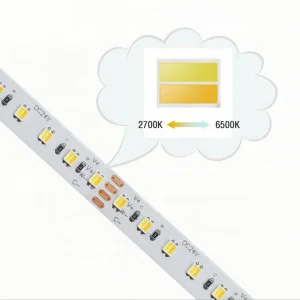
Yes. Our catalog includes 1800K to 3000K Dim-to-Warm COB strips and 2700K to 6500K Tunable White CCT systems. These dual-channel designs enable vehicles to adjust color temperatures dynamically, changing from alert cool daylight during morning commutes to relaxing warm tones for evening driving.