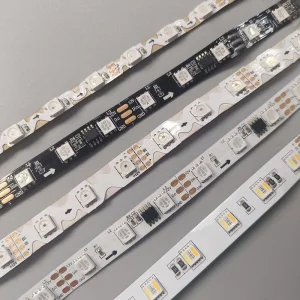
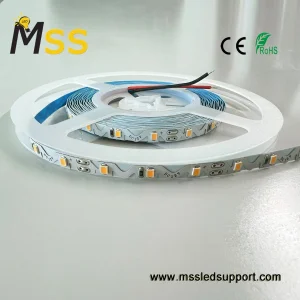
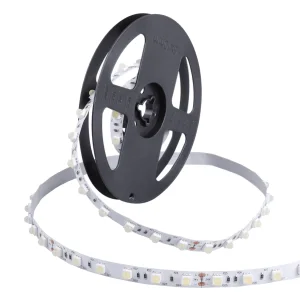
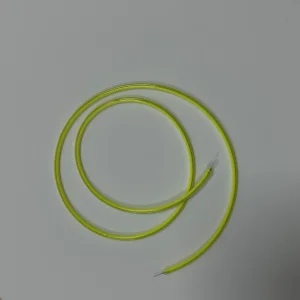
In modern commercial and industrial lighting procurement, the transition from flexible LED strips to heavy-duty LED rigid bars represents a strategic shift toward longevity, thermal efficiency, and mechanical durability. Large-scale global enterprises, electrical contractors, and architectural consultants no longer view lighting merely as an aesthetic utility. Instead, it is evaluated as a critical capital asset with a direct impact on operational expenditure (OPEX) and carbon footprint goals.
Industrial environments—ranging from sub-zero refrigeration warehouses and petrochemical refining units to high-humidity marine platforms—present harsh conditions that quickly degrade standard flexible circuits. Heavy-duty LED rigid bars address these challenges through robust structures featuring metal-core printed circuit boards (MCPCBs) and premium extruded aluminum profiles. The integration of high-reliability rigid platforms provides structural support, preventing mechanical stress on solder joints caused by thermal expansion and contraction cycles.
From a Procurement Manager's perspective, the key decision matrix involves evaluating total cost of ownership (TCO). While the initial capital expenditure (CAPEX) for rigid aluminum bars is higher than flexible alternatives, the mitigation of maintenance calls, scaffolding hire, and systemic downtime yields a rapid return on investment. Furthermore, the capacity for high-efficacy outputs (often exceeding 140 lm/W) translates directly to reduced utility bills, helping companies meet environmental, social, and governance (ESG) mandates.
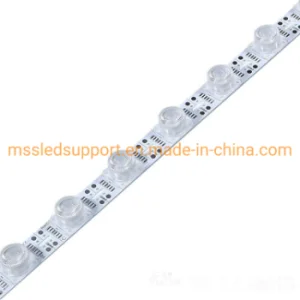
To understand the longevity of industrial-grade linear rigid bars, it is essential to examine their technical anatomy. A high-efficacy LED rigid bar is not simply a flexible strip glued to an aluminum channel. It is a highly engineered system where each component is optimized for performance, thermal conductance, and optical control.
The base of any heavy-duty rigid bar is the circuit board. While standard light bars utilize standard FR4 substrate, premium suppliers implement aluminum-clad or copper-clad MCPCBs. The thermal conductivity of standard FR4 is approximately 0.25 W/m-K, whereas high-performance MCPCBs offer values ranging from 1.5 W/m-K up to 3.0 W/m-K. This material choice ensures that the junction temperature of the LED chip (Tj) is kept low, preserving the lumen maintenance factor and preventing premature chromaticity shifts.
Heavy-duty applications demand extruded structural profiles, typically composed of 6063-T5 aircraft-grade anodized aluminum. The structural profile serves a dual purpose: it protects the internal electronics from mechanical impacts (IK rating) and acts as the primary heat sink. Precision fin design increases the surface area for convective heat transfer, allowing the system to operate reliably in ambient temperatures exceeding 50°C.
| Technical Parameter | Commercial Grade Specification | Industrial Heavy-Duty Specification |
|---|---|---|
| Substrate Material | FR4 or Single-sided Aluminum (1.0mm) | Enhanced MCPCB (1.6mm to 2.0mm) |
| Thermal Conductivity | 0.5 - 1.0 W/m-K | 2.0 - 3.0 W/m-K |
| Ingress Protection (IP) | IP20 - IP65 | IP67 - IP68 / IP69K (Hermetic Polyurethane/Silicone Potting) |
| Color Rendering Index (CRI) | Ra > 80 | Ra > 90 / R9 > 50 (High Fidelity Spectrum) |
| Solder Joint Reliability | Standard SAC305 Lead-Free | High-Fatigue Resistant Alloys with Gold-plated Pads |
To survive environments exposed to chemical washdowns, saline spray, or UV radiation, industrial rigid bars utilize advanced optical materials. High-transmittance, UV-stabilized Polycarbonate (PC) or optical Polyethylene (PMMA) covers are co-extruded with the profiles. For extreme environments, liquid silicone rubber (LSR) injection molding or polyurethane potting provides a void-free, hermetic seal that maintains transparency without yellowing or cracking under intense sunlight or chemical exposure.
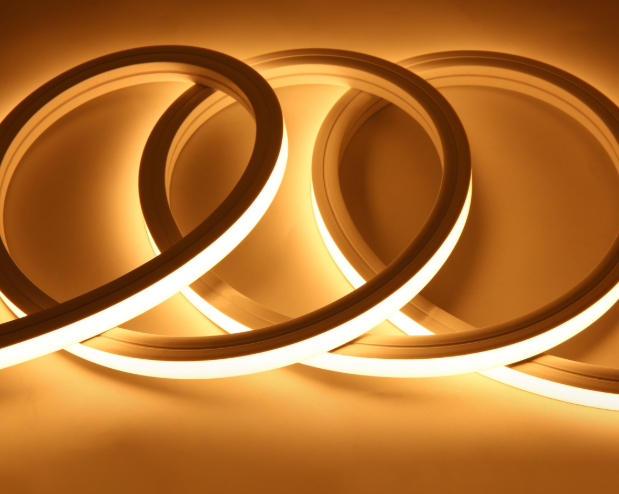
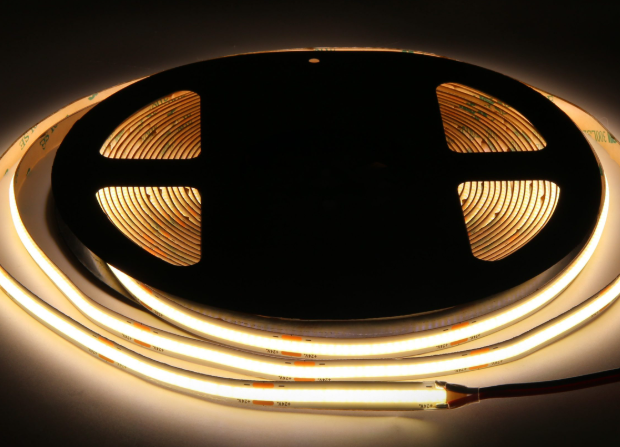
Established in 2011, Zhejiang Zionsville Lighting Co., Ltd. has grown to become a leading manufacturer and exporter of high-quality LED lighting solutions. Our comprehensive portfolio, spanning Neon Lights, COB Strips, LED Strips, and LED Washers, is designed to meet strict international standards and perform under demanding operational conditions.
Our manufacturing facility operates under the ISO9001 quality management system, integrating advanced production technologies and robust quality control procedures. We support our global partners with fully certified products holding ETL, TUV, CE, and RoHS accreditations, simplifying local compliance procedures across major international markets.
A core driver of Zionsville's market presence is our in-house testing laboratory. Every batch of LED rigid bars undergoes rigorous evaluation to verify its thermal and mechanical stability before shipment:
Our production line features over 30 automated assembly machines, including high-speed SMT placement machines, reflow ovens, automatic glue dispensing setups, and automated optical inspection (AOI) units. This manufacturing base allows Zionsville to offer flexible ordering options—such as free samples, no minimum order quantity (MOQ), and fast turnaround times—complemented by a 5-year warranty and 24/7 technical support.
The versatility of modern heavy-duty linear rigid bars makes them suitable for a wide range of challenging macro-industry applications:
Standard lighting fixtures frequently fail in cold storage facilities due to moisture condensation and driver failure at low temperatures. Zionsville's custom IP68 rigid bars, designed with integrated low-temperature drivers and specialized silicone gaskets, maintain constant light output and prevent seal degradation down to -40°C.
Uniform illumination without dark spots is critical for commercial branding displays. Utilizing our High Power 3030 Edge-lit Rigid Bars, global signage manufacturers can design slim, double-sided lightboxes. These bars use specialized narrow-beam lenses (e.g., 30° or 15°x45° asymmetric optics) to project light evenly across large textile graphics, reducing the overall fixture count and lowering power consumption.
Food and pharmaceutical processing plants clean their facilities using high-pressure hot water and sanitizing agents. Standard linear fixtures can easily suffer water ingress under these conditions. Our fully potted, IP69K-rated heavy-duty LED rigid bars withstand aggressive clean-in-place (CIP) washdown procedures, protecting internal circuitry from moisture and chemical damage.
The linear solid-state lighting sector continues to evolve, driven by advancements in semiconductor physics, materials science, and smart building integration. Leading manufacturers like Zhejiang Zionsville Lighting are focusing development on several key areas:
Navigating cross-border trade requires suppliers to maintain strict compliance standards and robust supply chains. Zhejiang Zionsville Lighting has built a comprehensive support network to ensure smooth operations for our international partners:
International Standards & Certification: Our products are certified under ETL (for North America), TUV/CE (for Europe), and RoHS compliance frameworks, ensuring they meet regional safety and environmental standards.
Logistical Support: We offer flexible delivery terms, including FOB, CIF, and DDP shipping models, supported by real-time tracking to ensure reliable transit times to key markets.
Post-Purchase Warranty & Service: We back our industrial-grade products with a 5-year replacement warranty, supported by 24/7 technical assistance to resolve project design, installation, or performance queries promptly.
 Zionsville Lighting